
Solutions
Dynamic emergency and exit lighting
Smart exit lighting that integrates with your fire detection or building safety system to redirects occupants toward safe routes in real time.
How it works
Three modes, switched by your safety system
Active guidance for evacuation, not just a signage
Traditional exit signs play a crucial role in building safety, but they share one vulnerability: they're static in a dynamic emergency.
A static sign keeps pointing toward a route that may already be compromised, whether by spreading fire, active smoke, or a structural blockage, leaving occupants walking straight into danger.
Our dynamic sign was built to solve exactly that. It switches from standard exit signage into active guidance.
Browse ProductWhy dynamic
One Sign,
Every Scenario
Dynamic Dual-Mode Pathfinding
A single fitting combines a bright red "X" to flag unsafe exits with a green running man to guide occupants toward safe ones, giving clearer, more responsive guidance than static signs.
Premium, Compliant Design
Built to AS/NZS 2293 and AS/NZS 60598.1 with a clean, architectural housing that suits modern interiors.
Seamless System Integration
Triggered directly by a building's central safety system via standard 24VDC or voltage-free (dry contact) signals, as specified by a fire safety engineer.
Configurable Direction On Site
Set the arrow to point left, right or straight ahead during installation. One sign covers every route, which keeps ordering simple and reduces the risk of the wrong unit arriving on site.
- Compliance standard
- AS/NZS 2293
- Luminaire safety
- AS/NZS 60598.1
- Interference compliance
- EMC
- Lithium batteries
- LiFePO4
Applications
Where dynamic exit lighting fits

Commercial
Offices, corporate HQ, and business parks

Public venues
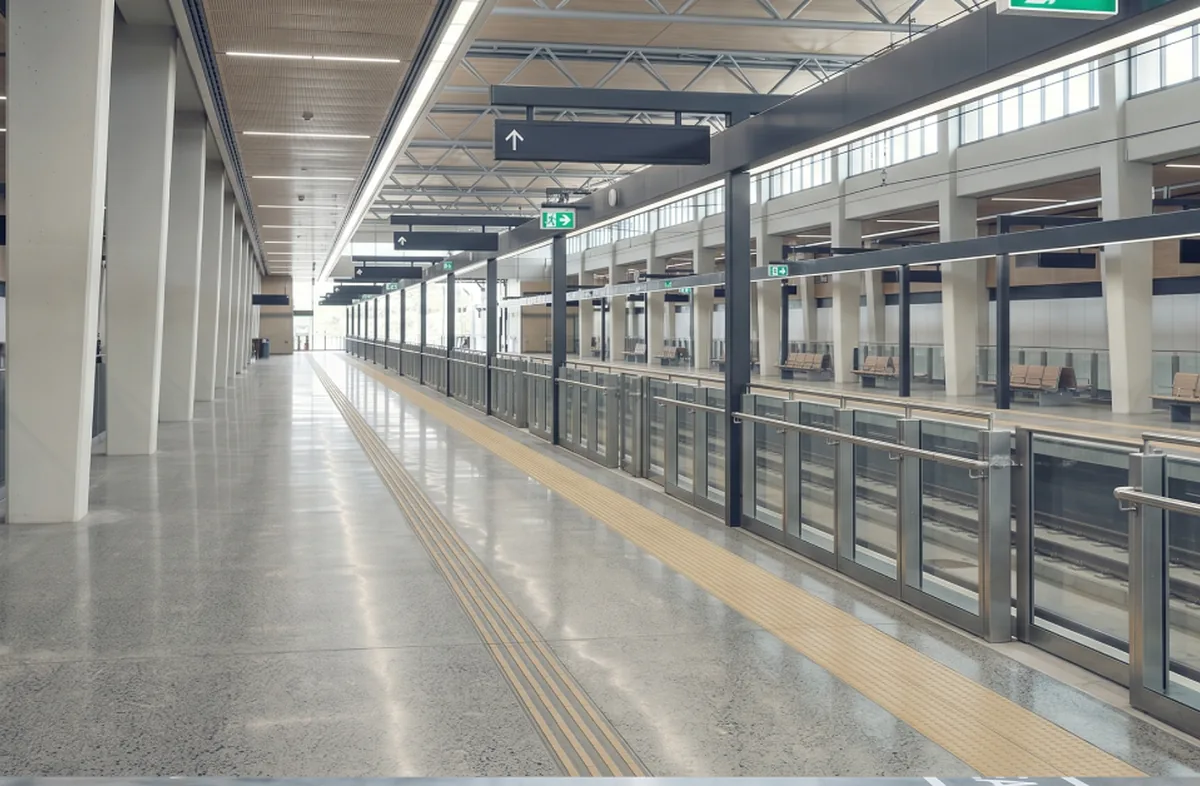
Theatres, stadiums, airports
Healthcare
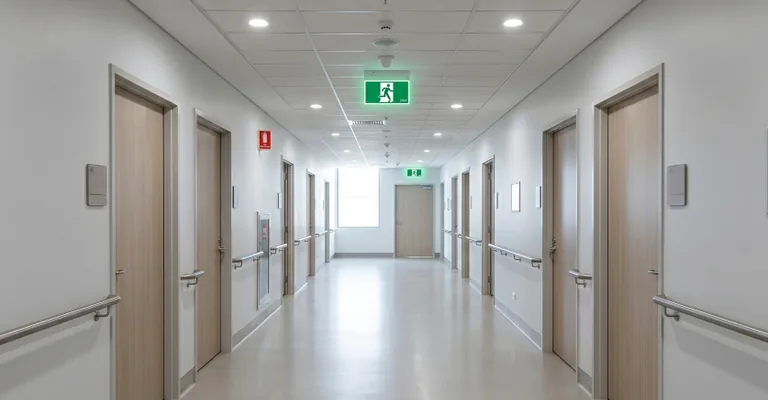
Hospitals, clinics, and aged care
Education
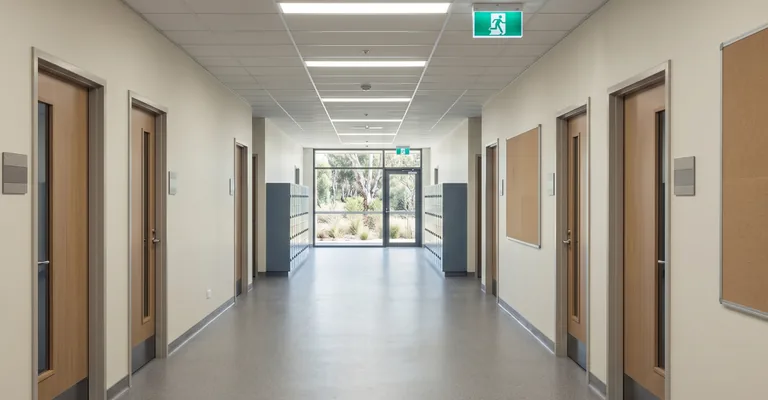
Schools, universities, and training campuses
Residential
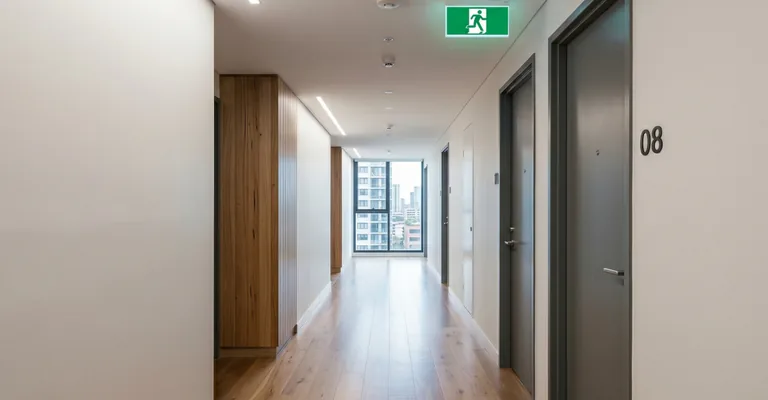
Apartments, high-rise towers, and common areas
Trusted by
partners nationwide








Frequently asked questions
How does the dynamic sign know when to switch modes?
It doesn't decide on its own. The unit is wired to your building's fire detection or life safety system and switches modes only when it receives a trigger signal, either a standard 24VDC input or a voltage-free (dry contact) closure, as specified by your fire safety engineer.
What happens to the sign under normal conditions?
In standby, it operates exactly like a standard exit sign: a white running-man legend illuminated on a green background. Dynamic mode only activates when the connected safety system detects a threat.
Can the same sign show both the red "X" and the green running man?
Yes. The unit combines dynamic red "X" and dDynamic green functions in a single unified fitting, so one product line can cover both "avoid this route" and "go this way" signalling across a building.
Is it compatible with our existing fire alarm panel?
It's built to accept industry-standard 24VDC or voltage-free contact closure signals, which covers most major fire alarm panels. Your fire safety engineer confirms the exact interface for your system during specification.
What standards does it comply with?
It's built to meet AS/NZS 2293 (the compliance standard for emergency lighting and exit signs) and AS/NZS 60598.1 (luminaire safety), and it meets EMC requirements for electromagnetic interference.
What kind of battery does it use, and why does that matter?
It runs on LiFePO4 (lithium iron phosphate) batteries, chosen for their stability, long cycle life, and safety profile, which matters for a device that has to work reliably during an emergency, potentially after months in standby.
Where can this be installed?
It suits a wide range of settings, including office buildings, theatres, stadiums, schools, hospitals, shopping centres, airports, warehouses, and apartments, essentially any commercial or public environment with a life safety system.
Does it require special maintenance compared to a standard exit sign?
It's premium, architecturally designed housing meets standard commercial aesthetic requirements, so it installs and maintains like any compliant exit sign, with the added integration point to your fire system that a technician sets up at commissioning.
Can the arrow direction be changed?
Yes. The arrow can be set to point left, right or straight ahead using a DIP switch inside the battery compartment, beneath the top cover. This is normally configured by the installer during commissioning.
Talk to the emergency lighting specialists
Whether you need product information, technical support, or stock for your next job, our team is here to help.